
.png)


You have to read it to beelieve it
By Links Research & Evaluation
Honeybees have a dance move called the ‘waggle dance'. It's not actually a dance move at all - but a clever way of communicating between themselves, to tell their fellow bees where to go to find the best source of food. It took the researchers at Sussex University in the UK two years to decode the waggle dance.
We would also like to share with you the recent experiences of Links Research & Evaluation when we designed and led an independent evaluation of a UNESCO and Guerlain biodiversity promotion and womens beekeeping programme called ‘Women for Bees’, in partnership with Azaka Consulting.
UNESCO describes this programme as: ‘’Women for Bees is a state-of-the-art female global beekeeping entrepreneurship programme launched by UNESCO and Guerlain. It is implemented in UNESCO designated biosphere reserves around the world. Its godmother, actor, film maker and humanitarian activist Angelina Jolie, promotes the twin objectives of women’s empowerment & biodiversity conservation and sustainable use''.
The programme has covered Biosphere Reserves in Ethiopia, Rwanda, Cambodia, China, Japan, India, Bulgaria, Russia, France, Spain, Italy, Greece and Slovenia.
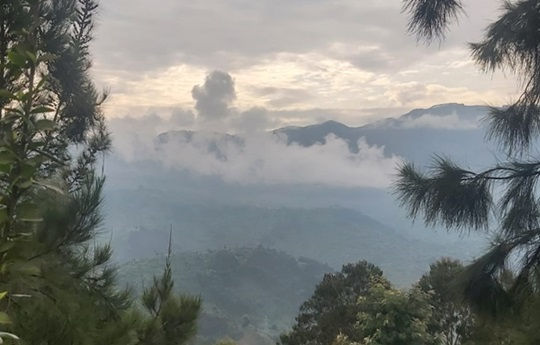
Gishwati-Mukura Biosphere Reserve, in the Albertine Rift in the western part of Rwanda.
UNESCO also say: ‘’beekeeping can generate income in rural areas for disadvantaged population who don’t own crops or farms. It can also generate income and improve food security in areas where agricultural production is minimal’’.
We hope that this post could inspire other organisations to introduce similar initiatives to help achieve their outcomes and change the lives of women - whilst also enhancing local biodiversity and contributing to the global Sustainable Development Goals (SDGs).
We all know that, without bees, many of the foods we rely on would be severely reduced, and ecosystems would be significantly impacted. Bees have an enormous impact on the world as essential pollinators, contributing significantly to global food production, biodiversity and ecosystem health. They pollinate a vast array of crops, including many fruits, vegetables and nuts. They also play a vital role in the reproduction of wild plants, supporting overall biodiversity. The pollination services bees provide have a significant economic impact, supporting agriculture and related industries.
One of the main approaches of the ‘Women for Bees’ programme is to focus on ‘modern methods meets sustainable and local beekeeping techniques, as well as native bee species’, as well as to help women overcome any socio-cultural obstacles to their participation in beekeeping. The design aimed to include approaches that addressed needs of vulnerable populations, connecting communities to local and national honey markets and ensuring that they are adjacent to the Biosphere Reserves, to assist with enhancing national biodiversity efforts.
This was done by drawing on the previous experience of the programme main partners, UNESCO and Guerlain, in conjunction with multiple stakeholders, as well as provision of equipment such as hives, tools and suits and ensuring tailored beekeeping training.
When looking at the impact of ‘Women for Bees’, during our visits to cooperatives in Slovenia and Rwanda, we found that, due to increased honey production following their engagement in the project, the income women can derive from producing honey products and their cooperative has increased, even doubled in some cases (e.g. the women are connected to a local honey processing and packaging factors, which then transports the delicious honey to shops and supermarkets). In addition, the possibilities for sustainable tourism increase (e.g. to the Biosphere Reserves themselves, which were seen to be better protected by communities to safeguard these natural habitats, with improvements in biodiversity were also seen.
In the case of this programme, another enhancing factor has also been UNESCO producing ‘Roadmaps for Biodiversity’ in close collaboration with Governments, specifically, the Ministries of Environment and other partners, roadmaps which then also identified networks of women beekeepers and entrepreneurs.
As part of our evaluation of this programme, our team visited different locations, including the Kozjansko & Obsotelje Biosphere Reserve in Slovenia. Slovenia offers various ‘Apitourism’ experiences, including visits to beekeeping centres, museums, and apiaries, where visitors can learn about beekeeping practices, taste honey, and even participate in honey-related activities.

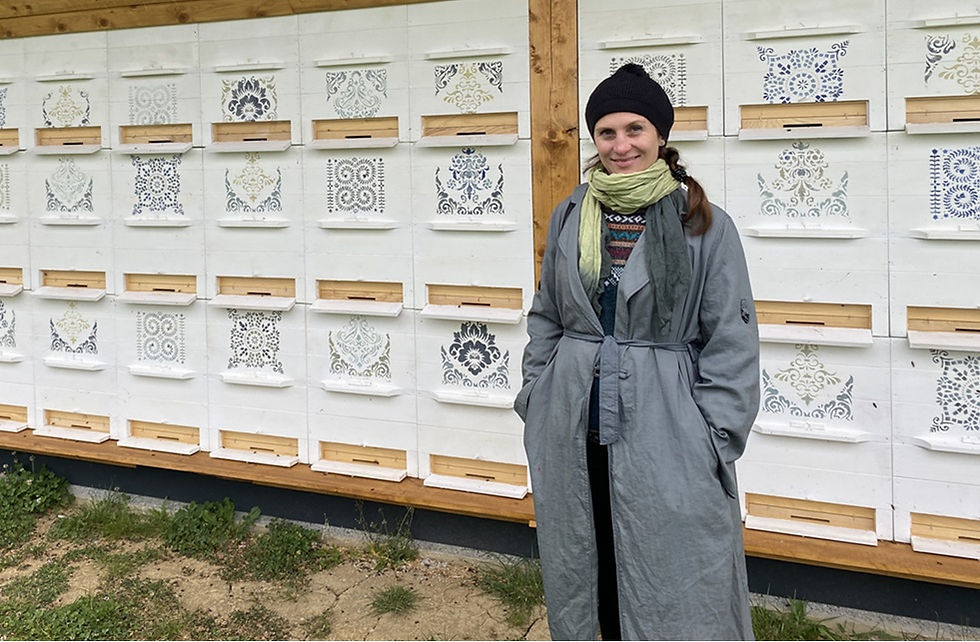
In Slovenia, it is not uncommon to see more than 600 motifs of beehive panels on the large hives, a unique pictorial folk "encyclopaedia" drawn by the beekeepers themselves, an image of life, knowledge, thinking and beliefs of the ancient Slovenian village.
As well as Slovenia, we also visited the Gishwati-Mukura Biosphere Reserve, in the Albertine Rift in the western part of Rwanda, not far from mountainous Virunga National Park, one of the homes of the mountain gorillas. Gishwati-Mukura is a beautiful area of rich, natural forested habitat - and was only designated as a UNESCO biosphere reserve in 2020. Supported by a dedicated park management network and local organisations, this ancient forest is home to a group of approximately 30 chimpanzees, as well as golden monkeys, blue monkeys and the L'Hoest's monkeys, a fragile forest species found only in the upper eastern Congo basin.

In Rwanda, we met with several women’s cooperatives to learn from their experience and who also took us on a tour of the networks of hives, adjacent to the Biosphere Reserve. They explained that bees are intelligent; they can perform complex learning tasks, such as remembering the best places to forage for nectar and pollen. When you see bees buzzing above a flower bush, they’re probably having a good sniff to try and work out which flower will give them the best return in terms of flower and pollen. Once they get the scent, they follow it, much like we’d follow the aroma of a freshly baked pie. They use their antennae’s many smell receptors to locate flowers, communicate through pheromones, and distinguish between hive members. They can even recognise their keepers face and scent, and as they are also sensitive to changes in their habitat, it important to ensure a sense of routine and calmness around the bees. Smoke was used when we visited the hives, as this is also seen to keep the bees calm.

Challenges and risks to beekeeping
We also learned that climate change poses challenges to beekeeping, including changes in flora availability, increasing temperatures and changing rainfall patterns. Incorporating plans to monitor and mitigate the effects of climate change on the project is important. Other challenges include conflicting land use priorities between farmers and beekeepers, which could potentially be overcome through collaboration and coordination between different the parties, with support from other project stakeholders. In cases where women have low socio-economic security, additional support may be needed for effective utilisation of the training.

Conclusion
We concluded that the partnership between UNESCO and Guerlain, with a range of national and community-based stakeholders, has made ‘Women for Bees’ possible. Both partners have an essential role in the success of the programme. When the different project elements come together successfully, the women are able to continue with the beekeeping activities. Such elements include having the skills, equipment, a supportive network, connections to market, as well as the capacity to continue with the beekeeping. In addition, tailored beekeeping training that builds on local knowledge, followed by community members seeing the benefits of protecting the reserves, as well as an overall awareness of the potential challenges to beekeeping. These factors brings about the impacts seen in the 'Women for Bees' programme, both in enhanced biodiversity and sustainable women-led entrepreneurship.
The possibilities of bee products

Links Research & Evaluation is a consultancy organisation based in Kenya, with a global focus. We are dedicated to enhancing the effectiveness of purpose-driven organisations. We design and lead research with communities about the impact and quality of social, rural development, economic and humanitarian programmes, bringing together stakeholders from different countries, as well as planning the related logistics. We actively connect individuals, teams and organisations, across different contexts and countries, with the goal of facilitating collaboration and support. Led by an experienced team, we partner with specialists, to deliver impactful, quality and evidence-based services.
About Marta Panco, founder of Azaka Consulting
Marta was a co-consultant on the evaluation team and conducted the visit to Slovenia. She is a highly qualified sustainable development consultant, with more than seven years of experience of working within international organisations in the area of agro/climate projects. Further to this, she has entrepreneurial experience in Africa, working with and bringing women together in business to strengthen their voices. Marta holds a three MScs (Agricultural Development & Natural Resource Management from SupAgro Montpellier, France; Agricultural Sustainable Development from the University of Copenhagen; Innovation & Quality Management from the University of Agricultural Science, Bucharest). Her native language is Romanian, she is fluent in English and French, as well as professional level Russian and Spanish. Marta has previous experience at Alliance for a Green Revolution in Africa (AGRA) in Kenya, at the United Nations Development Programme (UNDP) in Kenya, at the Global AgroEcology Alliance (GAEA) in Spain and at the Agricultural Research Centre for International Development (CIRAD) in Madagascar.
If you wish would like to contact Links Research & Evaluation in Kenya, we would be delighted to hear from you. Please use the contact form here



Comments